
08 / Curtains
Curtains and drapery
25" – 100" finished, per panel
Panels cut and sewn to your window, on hardware we install ourselves. Ready-made drapery comes in three lengths and your ceiling is not one of them. Custom means the hem lands where you want it — breaking on the floor, kissing it, or a half inch above.
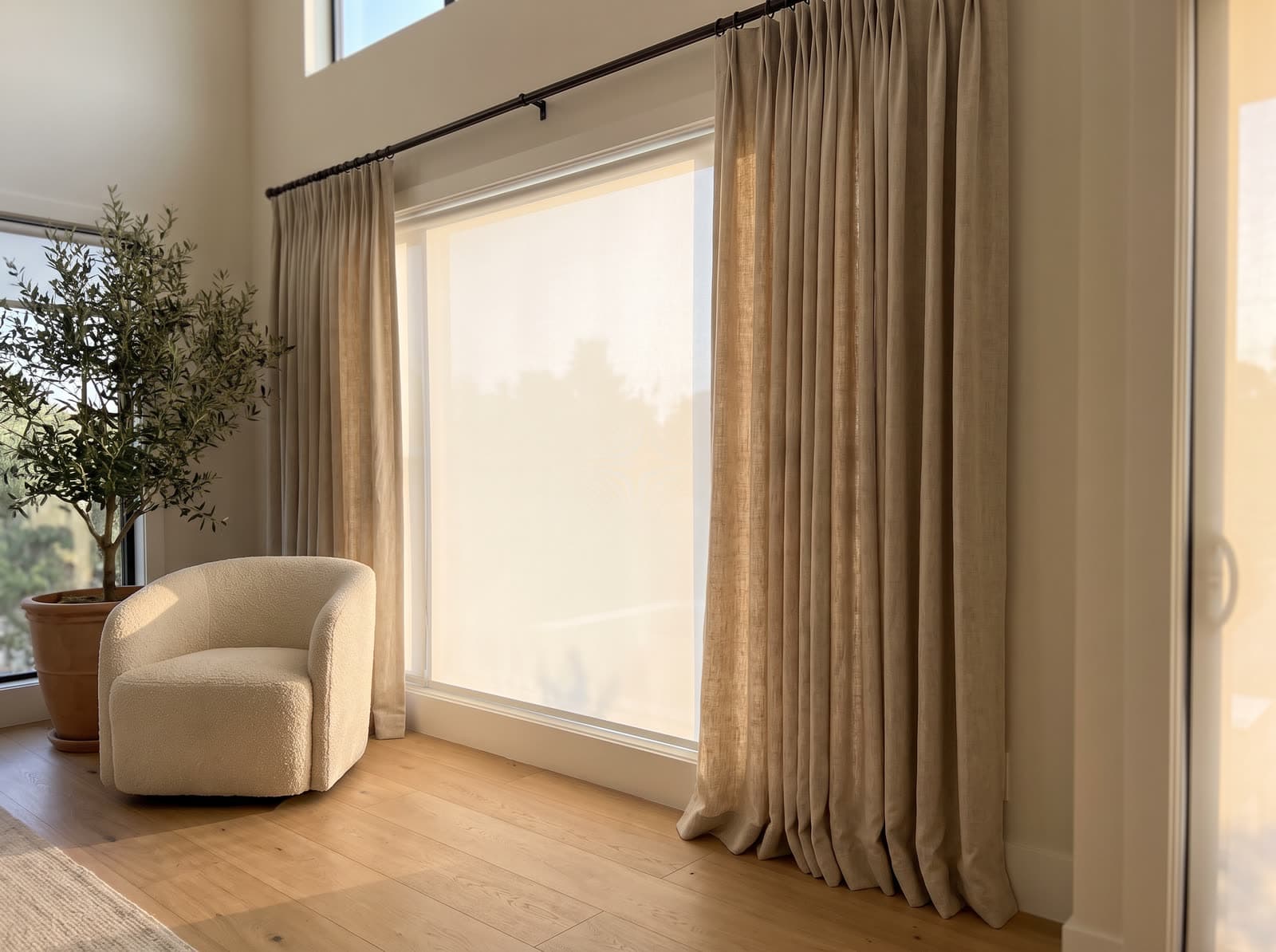
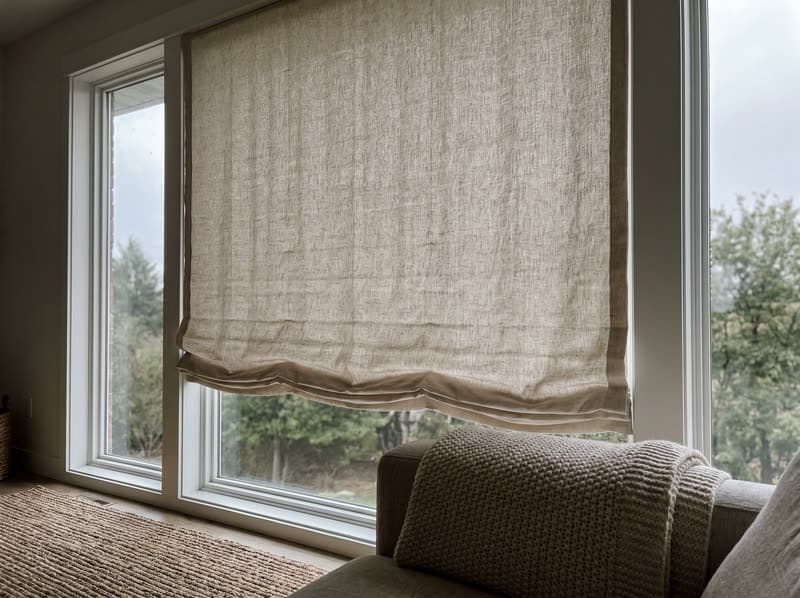
Alpharetta, GA · living room
What it is, in numbers.
As installed
- Panel width
- 25" – 100" finished, per panel
- Length
- To 144" — measured to your floor
- Heading
- Pinch pleat · euro pleat · ripplefold · rod pocket
- Lining
- Unlined · cotton sateen · blackout · interlined
- Hardware
- Rods, ceiling track, motorized track
- Fullness
- 2× standard · 2.5× on sheers
- Lead time
- 4 – 5 weeks from measure
- Warranty
- 3 years on workmanship
Options we quote
- Lift systemRequired
- Continuous chain · Cordless · Free-stop · Motorized
- Light controlRequired
- Sheer · Light filtering · Room darkening · Blackout
- MountRequired
- Inside mount · Outside mount
- Control sideRequired
- Left · Right
Fabrics are chosen from the sample books at the estimate — we carry the full range to your house rather than asking you to pick from a screen.
How much daylight each fabric actually stops.
These are the figures we quote at the kitchen table. They shift a few points with the mount and the direction the window faces, which is why we measure before we promise.
Louver angle
30% → 98% blocked
- Sheer panel
- 30% blocked
- Lined panel
- 88% blocked
- Blackout lined
- 98% blocked
Softens the light, does not stop it.
Cotton sateen lining. Closes the room down at night.
With a return to the wall, a dark bedroom.
Light: 60% blocked34°
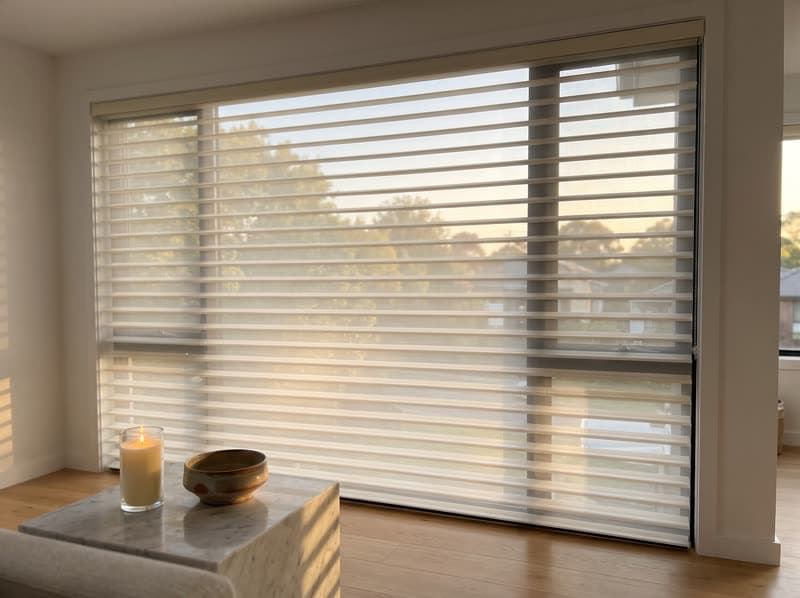
Drag the slats. This is the range a curtains shade covers on a typical window — from 30% at its most open to 98% closed. Your actual number depends on the fabric, the mount and which way the window faces.
Get the exact number for your windowAsk us what we'd put in our own house.
We'll tell you, and it usually isn't the most expensive one.
Hang high and wide
We set the rod close to the ceiling and run it eight to twelve inches past each side of the opening. The window looks taller, and when the panels are open they sit on the wall instead of covering glass. It costs a little more fabric and it is the single change that makes a room look finished.
Layering over a shade
Most of our drapery goes over a shade rather than instead of one. The shade does the light control and the panels do the softening — which means the fabric never has to be functional, so you can choose it on how it looks and hangs.
Rooms we install these in most: Living room · Primary bedroom · Dining room · Great room
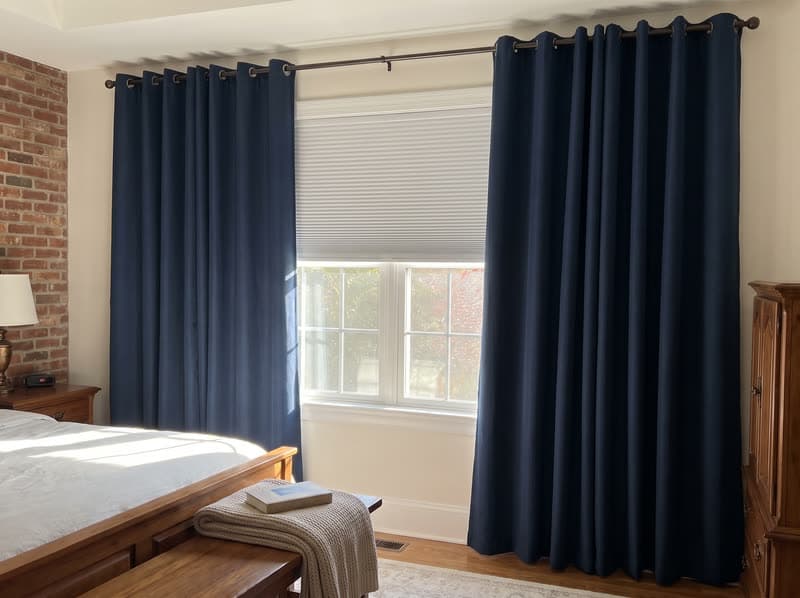
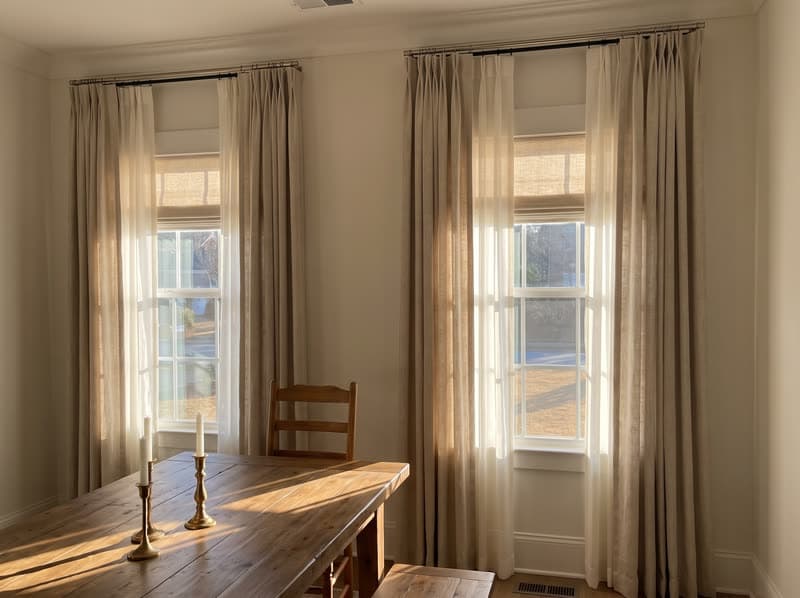
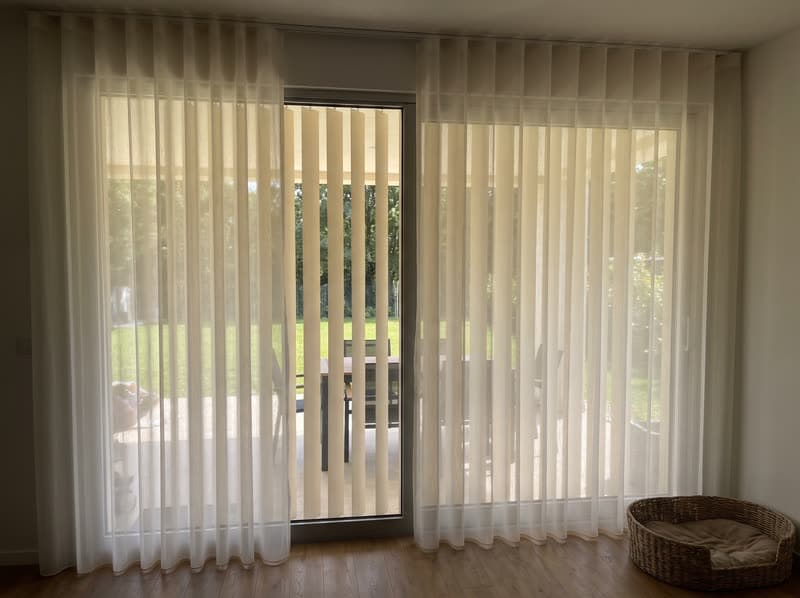
The same line, in four Georgia houses.
3 photographs
What people ask about curtains shades.
We measure from the rod to your floor at each panel position, because floors are rarely level. Standard is a half inch off the floor for panels you open and close, and a one to two inch break for stationary ones. You tell us which look you want; we do the arithmetic.
Yes, including motorized track for a great room or a wall of glass. Ceiling track is what we use where there is no header space above the window, and it is the cleanest way to run drapery across a very wide opening.
They are cut and sewn to our measurements by our workroom, then we hang and dress them ourselves — steaming the folds in so they hang straight from day one instead of settling for a month.
Free in-home estimate
See curtains samples in your own light.
We bring the curtains books to your kitchen table, measure every window, and price the job on the spot. Free, about an hour.