
09 / Faux Wood
Faux wood blinds
2" · 2.5"
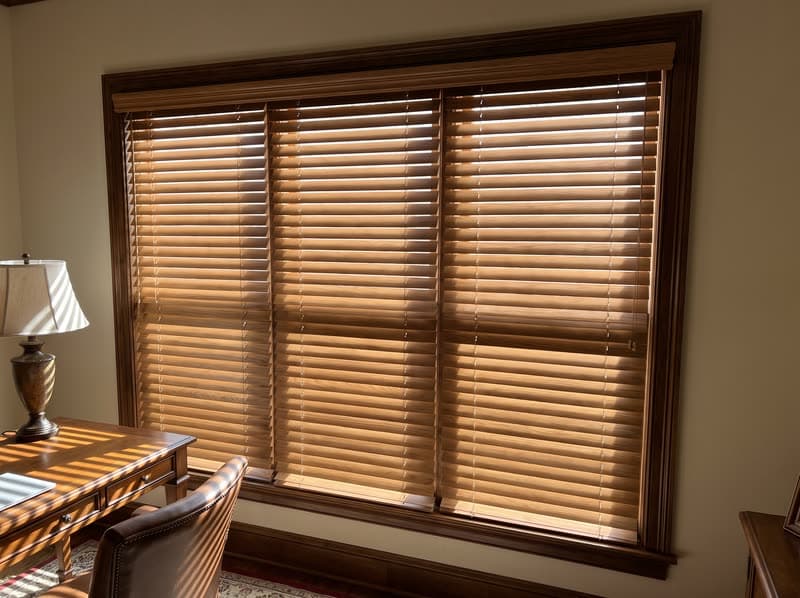
A composite slat — PVC over a foamed core — milled and finished to read as painted or stained wood. It does not swell, cup or warp when the room gets wet, which is why it goes over the kitchen sink and in the bathrooms while real wood goes everywhere else. It costs less than basswood and it weighs more.
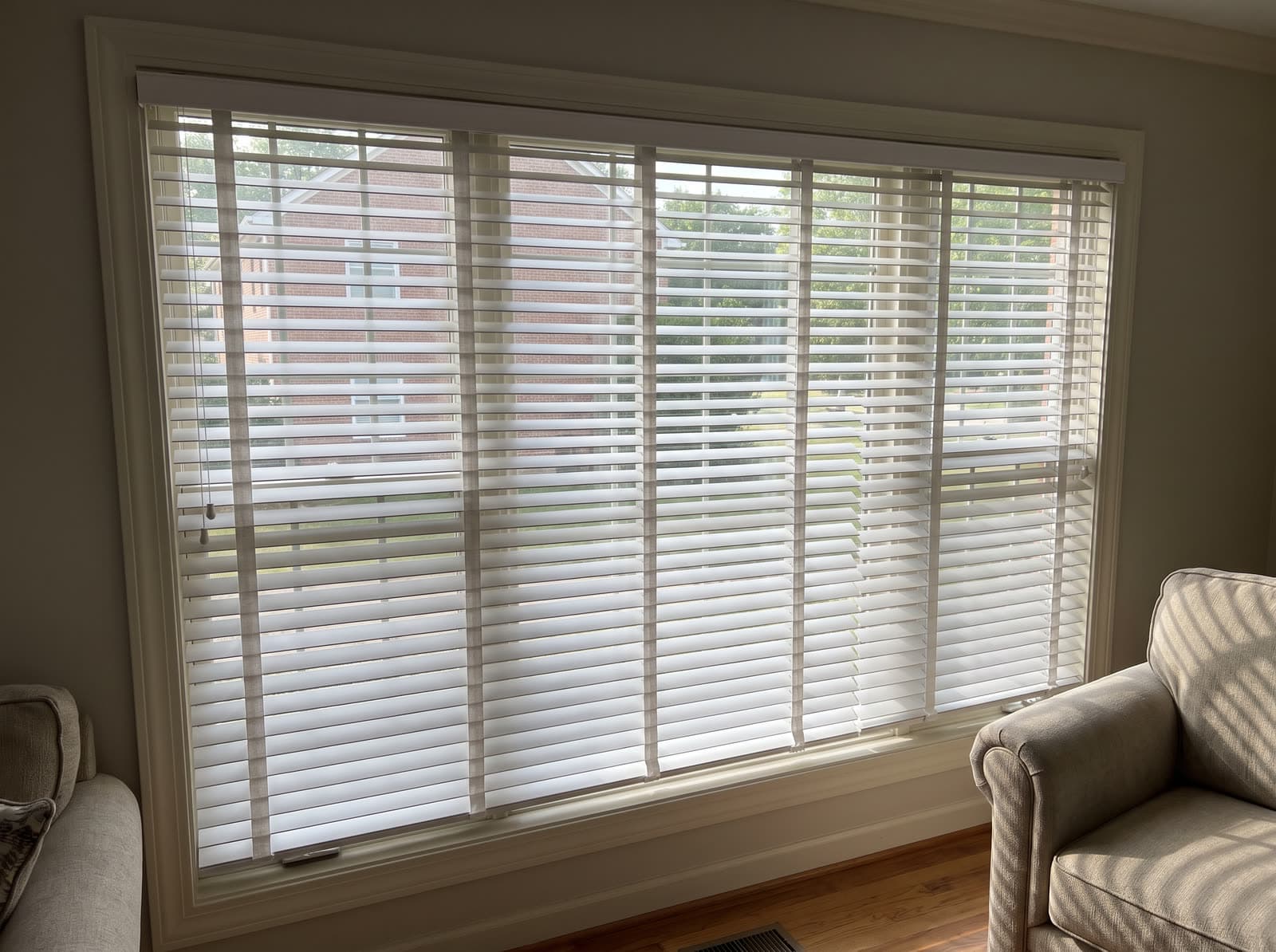
Alpharetta, GA · living room
What it is, in numbers.
As installed
- Slat width
- 2" · 2.5"
- Width
- 24" – 96"
- Height
- 24" – 120"
- Material
- PVC-faced composite, moisture-resistant
- Finish
- Painted whites · stained wood grains · cloth tape optional
- Tilt
- Wand · cordless · motorized
- Mount
- Inside or outside
- Lead time
- 2 – 3 weeks from measure
- Warranty
- 5 years on the mechanism
Options we quote
Fabrics are chosen from the sample books at the estimate — we carry the full range to your house rather than asking you to pick from a screen.
How much daylight each fabric actually stops.
These are the figures we quote at the kitchen table. They shift a few points with the mount and the direction the window faces, which is why we measure before we promise.
Louver angle
20% → 96% blocked
- Slats open
- 20% blocked
- Slats tilted up
- 68% blocked
- Slats closed
- 92% blocked
- Closed, routeless
- 96% blocked
Flat open, you look straight out between the slats.
Daylight thrown at the ceiling. What most kitchens sit on all day.
Privacy day and night, with a thin line of light at each route hole.
No cord holes through the slat, so nothing pinholes across the floor.
Light: 53% blocked34°
Drag the slats. This is the range a faux wood shade covers on a typical window — from 20% at its most open to 96% closed. Your actual number depends on the fabric, the mount and which way the window faces.
Get the exact number for your windowThe window over the sink is the one that ruins a wood blind.
Faux wood goes there instead, and it is the cheaper slat besides.
Where the composite earns it
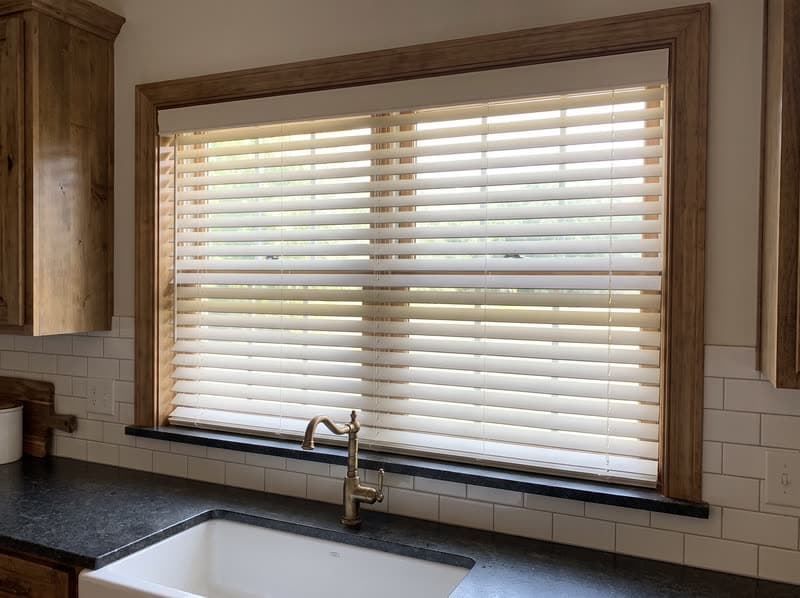
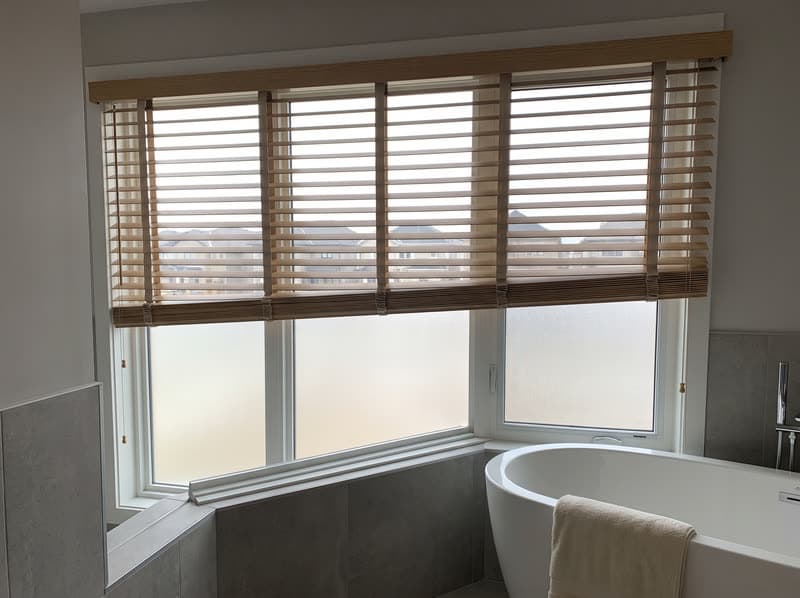
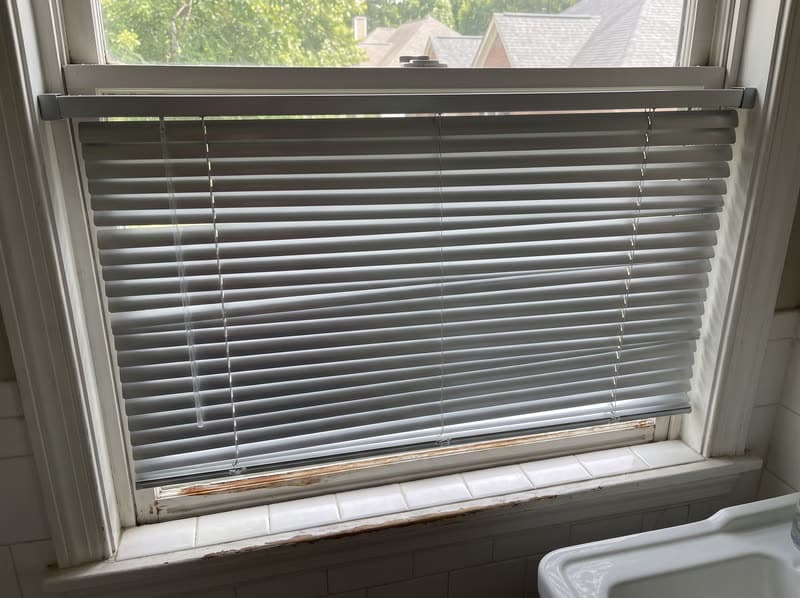
Steam, splash and a window that gets wiped down are what take a wood blind apart — the slat drinks, swells at the ends and stops sitting flat. A faux wood slat has nothing in it to absorb water, so a bathroom, a laundry and the window over the sink are exactly where we put it. It wipes with a damp cloth, which is the other half of the reason it ends up in a kitchen.
It is the heavy one
That same solid slat is why we cap a single faux wood blind at 96" wide. Past that the blind is genuinely tiring to raise and the headrail starts to bow, so we split a wider opening into two blinds on one continuous headrail and line the slats up across the join. On a wide window that has to be one piece, we move you to real wood.
Rooms we install these in most: Kitchen · Bathroom · Laundry room · Basement · Rental
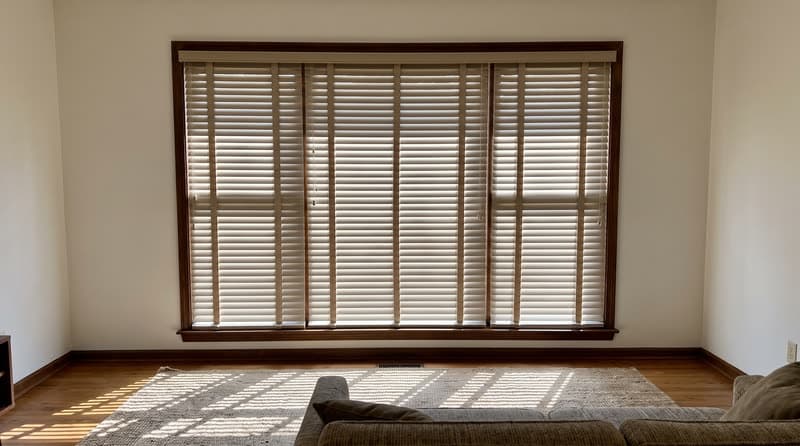
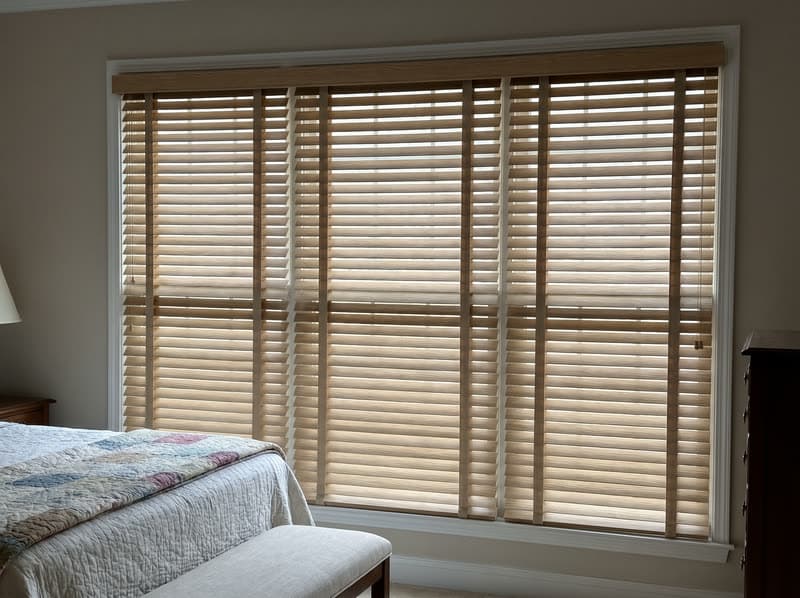
The same line, in 7 Georgia houses.
8 photographs
What people ask about faux wood blinds.
The slat will not. What we still watch is the mount: in a small bathroom with no fan, condensation collects on the window frame, so we set the brackets clear of standing water and use an outside mount where the sill stays wet. We have had these over tubs for years without a call-back.
In a painted white or off-white, nobody can tell — that is most of what we sell. In a stain, up close you can see the grain repeats, because it is printed rather than grown. If the blind is at eye level in a room you sit in, we will show you the two slats side by side and let you decide.
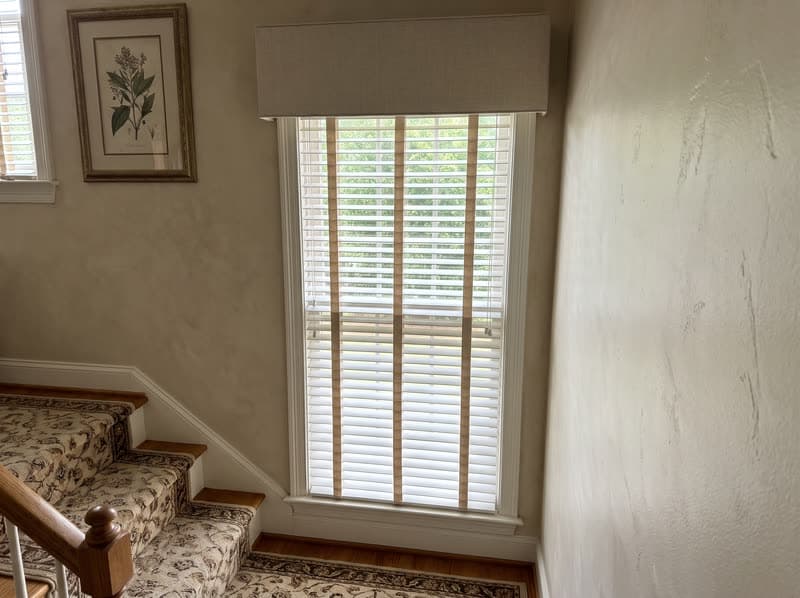
Cloth tape covers the ladder cords on the face of the blind with a woven band, which hides the route holes and makes the blind read as a piece of furniture rather than hardware. It costs more, it is only offered on the 2.5" slat, and in a dining room or a front-facing living room it is usually the thing that finishes the window.
Three lines next to this one.
Free in-home estimate
See faux wood samples in your own light.
We bring the faux wood books to your kitchen table, measure every window, and price the job on the spot. Free, about an hour.