
02 / Shutters
Shutters
2 lines
A shutter is not hung in front of the window, it is built into it: a framed panel on hinges that gets screwed to the casing and stays with the house when you sell it. Two lines cover it — a composite that will not warp over a bath, and a basswood that carries the widest openings in the fewest panels. Closed, with the frame shut around it, it is the nearest thing to a solid wall we fit short of a blackout fabric.
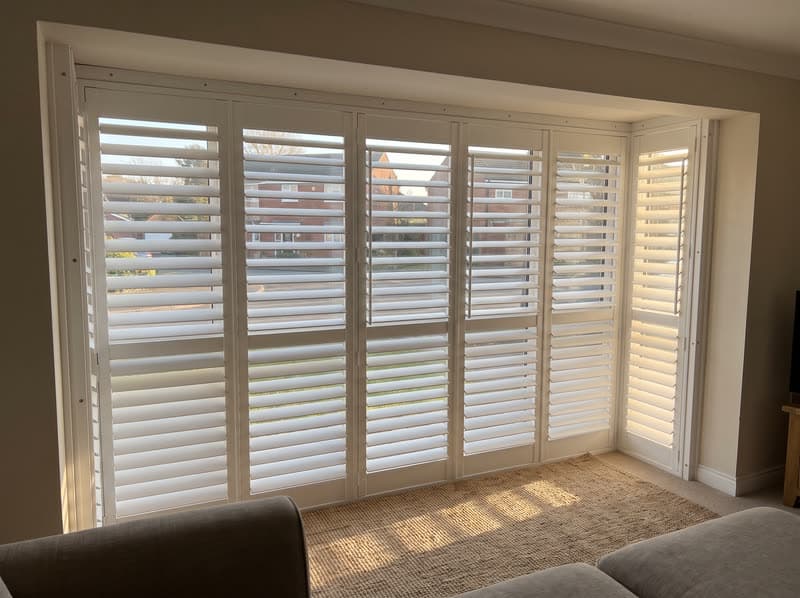
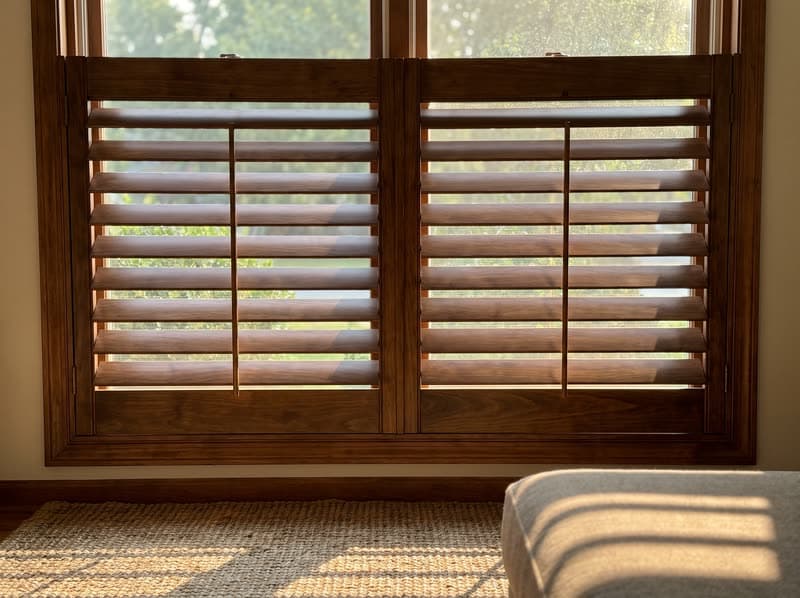
Two panels, and four questions that pick between them.
A shutter is joinery, so the questions are about the opening rather than about the fabric. We ask these four at the window, in this order, and the answer is usually clear by the third.
Does the room get steam?
A bathroom with a shower in it, a laundry, the window directly over the kitchen sink — that is composite and there is nothing to weigh up. Basswood takes the steam in at the ends of the louvre, swells, and a swollen louvre stops tilting flat and never starts again.
How wide is the opening?
The panel is the unit, not the window. A composite panel caps at about 29" wide and a basswood one at about 36", so a 70" opening is three composite panels or two basswood — and every extra panel stands another pair of stiles in the glass.
Full height, or café height?
A café shutter covers the bottom half of the window and leaves the top bare — privacy at eye level, daylight above it, which is what a front-elevation dining room usually wants. Full height is everything else, and it is what people picture when they say shutter.
Should the top and bottom tilt apart?
That is a divider rail: a bar across the panel that splits the louvres into two sets on separate tilts, so the top can be open for light while the bottom stays closed against the street. It costs a little more, it is the option we get thanked for most on a front bedroom, and it has to be decided before the panel is built.
Free in-home estimate
See the shutters in your own light.
We bring the sample books to your kitchen table, measure every window, and price the job on the spot. Free, about an hour — and it usually narrows 2 lines down to one.